











pipeBOT™
Closed-loop control for liquid pipelines, with up to 85% fewer manual commands.

maxOPT™ calculates the targets that move your pipeline toward its true hydraulic limit. pipeBOT™ executes them in closed loop, within every safety constraint.
Results from client deployments








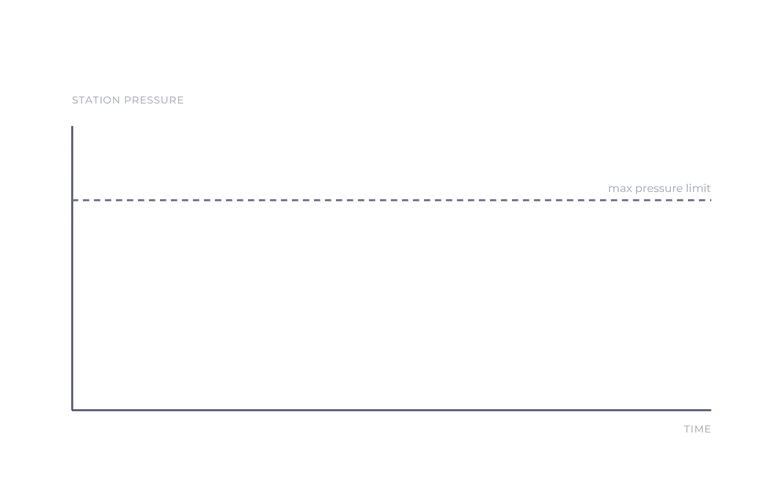
Controllers keep a buffer below hydraulic limits, and the buffer changes with every shift. On a prorated line, every barrel inside that buffer is revenue you don't collect.
01
Pressure and flow swings force wide safety buffers, leaving capacity untouched.
02
Experience levels vary, and so does how close each shift runs to the limit.
03
Spot premiums, swaps and take-or-pay commitments need real-time precision that manual operation can't deliver.
Pushes toward maximum throughput and lets safety, equipment and hydraulic constraints set the ceiling.
Calculates the back-pressure and pump configuration that unlock spare capacity.
pipeBOT™ carries out every target in closed loop, through your existing SCADA/DCS.
Weighs pump cycling and asset reliability, so throughput gains don't cost your equipment.
maxOPT™ only calculates targets. pipeBOT™ executes them through your SCADA/DCS, and operators can override at any time. ISO 27001 · SOC 2 Type II.
Read the safety FAQManual control: 87%
With maxOPT™: 91%
A major midstream operator deployed maxOPT™ on a 300+ mile prorated line, with pipeBOT™ executing the targets.
4%
average throughput increase
91%
capacity utilization
maxOPT™ is CruxOCM's throughput optimization application. It continuously calculates the pump configuration and pressure targets that push your pipeline toward its true hydraulic maximum. pipeBOT™ executes those targets in closed loop. Across deployments, maxOPT™ delivers a 2–7% throughput increase, worth $2–25M in additional EBITDA per pipeline per year.
Tell us about your pipeline. CruxOCM will estimate the additional throughput maxOPT™ could unlock.
Closed-loop control for liquid pipelines, with up to 85% fewer manual commands.
Automates gathering systems, with 90% fewer tank excursion penalties.
Adds autonomous DRA skid control for 3–8% lower DRA costs.
Calculates the minimum safe hydraulic profile for 1–3% lower power costs.
Meets contracted volume at the lowest power cost, with up to 10% savings.