
Industrial Automation Hub: How IAH™ Turns Every Deployment Into the Next One
Published: · Updated:
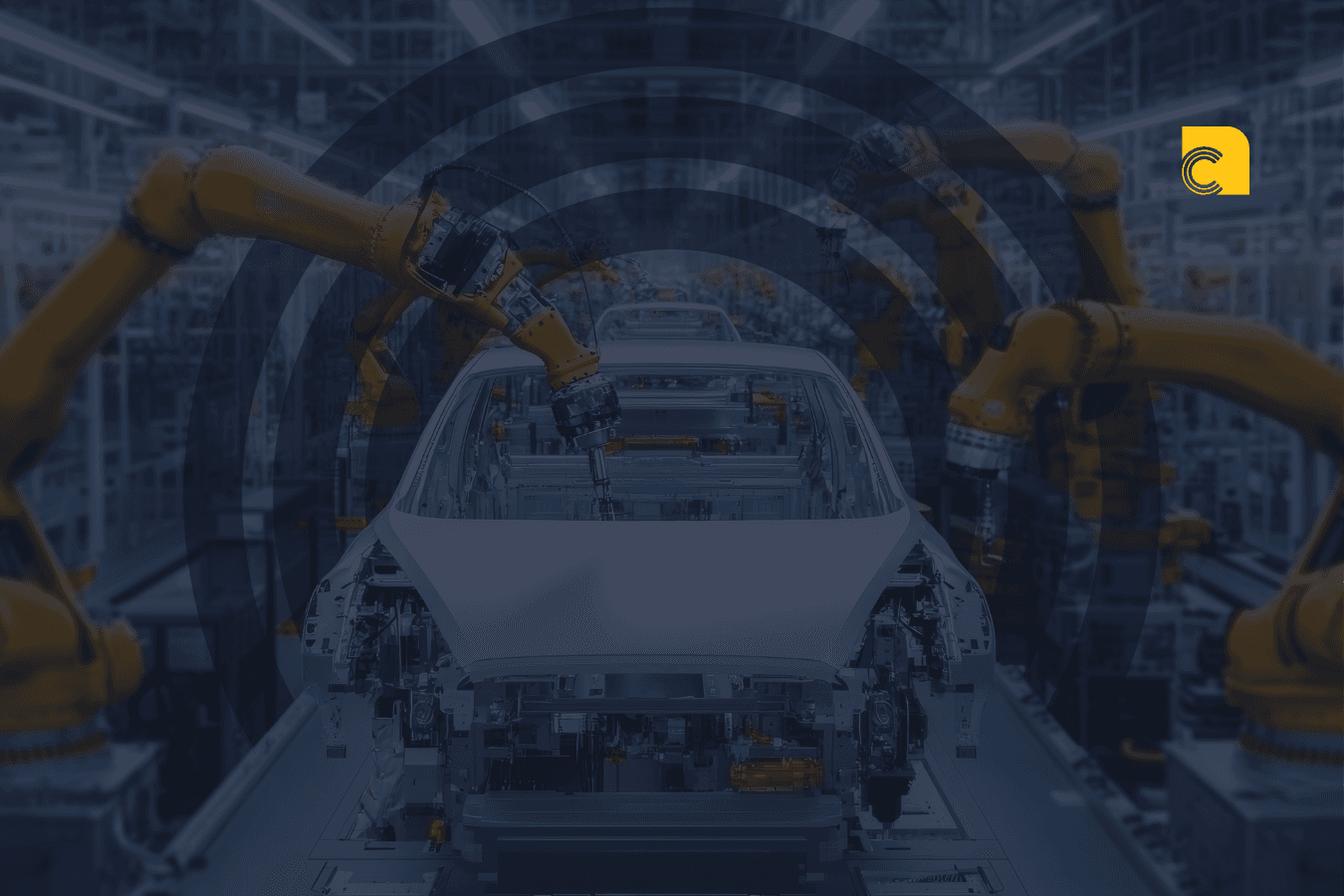
Palantir owns the ontology. Databricks owns the lakehouse. CruxOCM owns agentic deployment for industrial autonomy.
For decades, the heavy industry and energy sectors have been trapped in a deployment bottleneck. The Operational Technology (OT) software running the world’s most critical infrastructure—pipelines, refineries, power grids—has fundamentally lacked the agility of modern IT. That is the gap CruxOCM is closing.
What Is the Industrial Automation Hub?
The Industrial Automation Hub (IAH™) is CruxOCM's agentic-driven platform for deploying, supporting, and continuously optimizing control applications. It configures, tests, deploys, maintains and governs control applications like pipeBOT™ and maxOPT™ on every pipeline, using human-supervised agents across the full lifecycle — from configuration and validation to monitoring and performance growth.
With IAH™, CruxOCM is building a practical software factory for OT. Instead of treating every deployment as a bespoke engineering project, each one runs through the same platform: configured, tested against a digital twin and safe operating envelopes, approved by the client's engineers, then deployed and maintained.
Here is why this shift in agentic deployment for industrial autonomy changes the fundamental economics of industrial automation.
How Industrial Automation Hub Solves the Bespoke Trap
Before the IAH™, scaling industrial control software was an exercise in brute force. Every new asset deployment was treated as a distinct, manual engineering project.
Because industrial sites have unique physical characteristics, control systems were built from the ground up every single time. This meant heavy reliance on system integrators, massive service contracts, and timelines stretched over many months. In this paradigm, margins erode, scale is virtually impossible, and deploying across an enterprise happens serially, one painful integration at a time. It is a services business masquerading as a software business.
IAH™ as DevOps for the Physical World
The IAH™ acts as a software factory for operational technology. It brings the principles of CI/CD (Continuous Integration/Continuous Deployment) to heavy industry.
On each pipeline, IAH™ works from what that pipeline's SCADA data shows. It configures the control applications for that asset, tests them against a digital twin and safe operating envelopes, and puts the results in front of the client's engineers. Nothing deploys until they approve it. After go-live, IAH™ keeps watch over every application; when an asset changes, it flags the change, prepares an update, validates it and waits for approval.
IAH™ is self-service: the client's team works through it directly, and CruxOCM experts step in only for key decisions or analysis, if needed. And IAH™ learns from each deployment, so after the first, every pipeline that follows goes live faster — without rewriting the control system from scratch.
The Deployment Advantage
When the first deployment sets the pace for the rest, the unit economics of industrial automation change.
- Faster Implementation: IAH™ delivers 50% faster implementation of OT systems, and after the first deployment, every pipeline that follows goes live faster.
- Lower Engineering Cost: By removing manual, repetitive engineering work, each pipeline after the first costs less to deploy.
- Parallel Replaces Serial: Operators no longer have to wait for "Site A" to be fully finished before starting "Site B." Rollouts can happen in parallel across a fleet of assets.
- Value That Holds: IAH™ maintains every application and can improve its configuration, so the value holds, or even grows, as assets change.
Before vs. With IAH™: A New Deployment Model
The comparison below shows how IAH™ changes the deployment model from manual, serial execution to a repeatable platform approach built for scale.
| Metric | Before IAH™ (Legacy OT) | With IAH™ (CruxOCM) |
|---|---|---|
| Deployment Model | Bespoke, manual engineering | Repeatable, platform-driven deployment |
| Rollout Speed | Serial (One asset at a time) | Parallel (Fleet-wide scalability) |
| Implementation | Months to years | 50% faster implementation of OT systems |
| Economics | Linear, high-services cost | Lower cost per pipeline after the first |
| Governance | Changes tracked asset by asset | Engineers approve every deployment; every change traceable |
| Knowledge Base | Siloed per asset/engineer | Centralized on the platform; IAH™ learns from each deployment |
Why Deployment Economics Is the Business
In the industrial software space, having a brilliant control application is only half the battle. If you cannot deploy that application across a massive footprint efficiently, you do not have a venture-scale business.
Deployment economics is the business. By solving the deployment bottleneck, IAH™ doesn't just make our products faster to install; it fundamentally alters our customer acquisition cost, our time to revenue, and our net dollar retention. We are removing the friction that has historically capped the total addressable market for OT software.
From Products to Platform to Category
CruxOCM began by building best-in-class point products for specific industrial operations. But great products eventually hit the ceiling of their deployment infrastructure. So instead of scaling by creating more point solutions, we have created the platform to standardize heavy industrial control system deployments.
The IAH™ represents our evolution from a suite of Products, to a foundational Platform, and ultimately, to the defining player of a new Category: agentic deployment for industrial autonomy. We are standardizing how control system software is built, tested, deployed and maintained across the physical world.
The Future Belongs to the First Movers
In industrial automation, early momentum matters. IAH™ learns from each deployment, and once the first pipeline is live, every pipeline that follows goes live faster.
For industrial operators, the message is clear: the operators who move first and deploy across their assets through IAH™ will build a compounding operational advantage across their network that slower competitors will find hard to replicate.
Welcome to the control system factory, where CruxOCM’s Industrial Automation Hub turns agentic deployment for industrial autonomy into a scalable operating model.
Share this article


Collaborators

Written by
Vicki Knott, P.Eng.
CEO & Co-Founder at CruxOCM
Former control room operator, chemical engineer, and industry leader shaping the future of industrial automation.